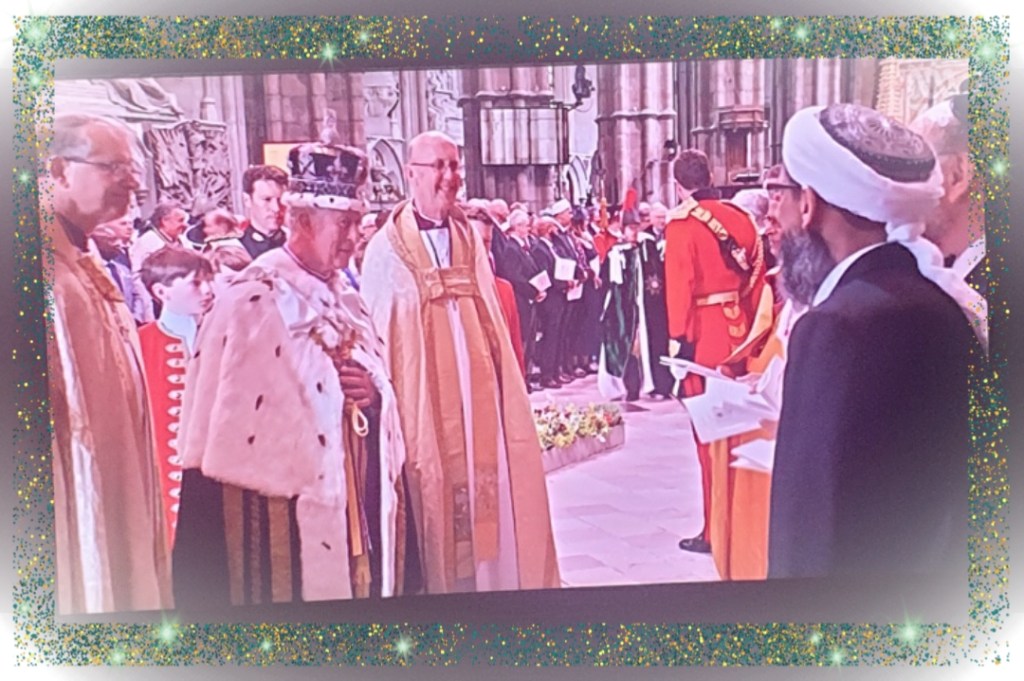
And so of this weekend just gone, we now officially have a new CPM – Commonwealth Prime Minister, which is interesting on a number of fronts because there is a blatant political statement in all of this which does an immense amount of good for the relational progress of ecumenism and interfaith dialogue in our world today.
And as a practicing Catholic, I was heartily impressed with the show of respect and desire on the part of the House of Windsor, Britain’s most traditional ruling party, (if we indeed use that term in a nuanced way to indicate the traditional partisan nature of this party while at the same time recognize that they do not don exactly the same kind of structural make-up as the more recent phenomenon of political parties), towards accentuating the importance of sowing into positive interfaith relations on a thrivingly continuous basis.
There was too alot of awesomely symbolic import in the ecumenical nature of the liturgy itself. Apart from the fact that there was a huge interlinking between the religious and the political, (the larger implication of which I will come back to a bit later on in the piece) with the ceremony comprising a complementary duality of the swearing-in of a Head of State concomitant with a Bishop’s installation or anointing being conferred upon the one being sworn in by another Bishop – yes – Charles Windsor was anointed to the dual office of both head of the Commonwealth of Nations and that of a Bishop – the latter being precisely due to the fact he is head of the Anglican Church. But his Bishop’s role is the “yin” if you like while his role as head of the Commonwealth of Nations is the “yang” side of this complementary duality. In this way, he is not like the Pope because the Pope’s primary or “yang” role is that of Bishop of Rome and simultaneously the sovereign leader of the Catholic Church. And unlike the Roman pontiff, Sir Charles Windsor is not the local Bishop of any diocese within the Anglican sphere but he has an overarching episcopal ministerial role within the general Anglican Communion as its supreme governor. Hence the “anointing” he was given during the swearing-in ceremony.
It must also be mentioned here that the old liturgical tradition of the Anglican Church, as could be seen from the order of service, shares some commonality with the way the Orthodox Church still today celebrates its own liturgy. The celebrant faces the altar instead of the congregation. And while this custom used to be the way Holy Mass was celebrated in the Tridentine rite of the Catholic Church, (that of the old Latin Mass prior to its replacement in 1962 with the new order of service), it is still upheld in both the Orthodox tradition and the old or “high” Anglican tradition. Also the did you notice that the particular style of Bishop’s mitre that both Charles Windsor and his wife donned following the anointing? Yes, this tradition too explains why there are female clergy within the Anglican Church! 😆 Well, it also is the same kind of mitre that Orthodox Patriarchs (Bishops) wear on certain occasions. While the pointed conical style mitres which are common to both the Catholic and Anglican traditions, are typically worn by the Bishops in both these traditions, it is interesting to note that only the heads of the Anglican Church and Orthodox Bishops wear the round kind of mitres, adorned with crushed velvet and ermine. I am absolutely wowed about the immensity of cultural confluence seen through all of this. It’s just fascinating!
I was impressed too by the authentic upholding of the unity in diversity principle as a central theme of Charles Windsor’s swearing-in, and in particular, the way the main actors maintained a sincere devotion to their respective faith tradition whilst being open-hearted to welcoming and honouring other faith traditions on an equal footing. It was a truly beautiful occasion and marked a stepping stone of grace I think for the spiritual and political wellbeing of the Commonwealth of Nations as long as all of these nations, their local leaders and populace follow the example given in this ceremony.
As mesmerizing a piece of theatre it was, its symbolism and implications go beyond just theatre for it contains a vital message which needs to be taken on board in all its fullness by each member of the Commonwealth of Nations as well as to also be proactively learned from universally speaking. Okay, it was a swearing-in ceremony for a head of state, yes, and swearing-ins for heads of state in the general sense happen whenever a new head of government is appointed but normatively not only do these occasions happen more regularly than once every 70 years or so, they more often than not do not tend to provide a profound moral lesson for the society directly affected by the new appointment to governance, let alone provide a window of opportunity for the whole world to look on and learn something new and exciting from the whole occasion.
The closest thing to such an occasion as that exhibited by this swearing-in of Charles Windsor as Prime Minister of the Commonwealth of Nations is a Papal Enclave – the election of a new Pope in the Catholic Church. Aside from this, the swearing-in ceremony witnessed this weekend past has no other living comparison in terms of the scale and universal implication. I suppose one reason for this is that like the Catholic Church, the Commonwealth of Nations is a huge mega polity in the sense that it comprises close to 56 nations in its realm while the Roman Catholic Church is the largest of the Christian denominations globally. So it figures why both the occasions for the welcoming in of a new leader of the Commonwealth of Nations as well as that of a Papal Election are occasioned events that are huge. I mean, if you think about the fact that the responsibility of governance insofar as one country is concerned is a huge task, then how does sharing a Prime Ministerial co-responsibility with the local heads of state for 55 other nations look? I mean, the scale is mind-boggling. And so also similarly for the Pope, being the head of such an enormous spiritual polity that encompasses many nations the world over is no mean feat! Hence the gargantuan nature of such celebrations that involve these two world leaders. And if you think of it merely in denominational terms, these two leaders head up the largest two Christian denominations globally. So there you go!
So what then of the symbolism? Well, it does point to an ushering in of a new way of doing things in the political sphere that ties spirituality and the necessity of peace-making through building positive interfaith relations in the process, and interweaves this spirituality deeply into the fabric of the change that we are as a whole world, undergoing. And it points to this being got underway first of all in the local surrounds of the place where this ceremony took place, and from this, the implications contained therein reverberate outwards to all the other places which will be impacted by it. So in this sense then, it is a very powerful thing, this ceremony. The other thing is that it is pointing to a new structurality in the way traditional politics are done. While presently, some of the language commonly used in the public sphere of this ceremony being convened and telecast globally, is overtly the same as on the other previous occasions such an event has taken place, there is nonetheless an underlying transitioning process, a decisive shift that is happening away from some forms of speech that are no longer useful because the collective consciousness is gradually learning that there was, is, and always will be only one King and that is God, Who is, Creator, Lord and Ruler of all the earth and the universe entire, irrespective of whether everyone within this collective consciousness of the whole earth is “consciously aware” of this fact in the here and now, or whether they even approve or disapprove of it.
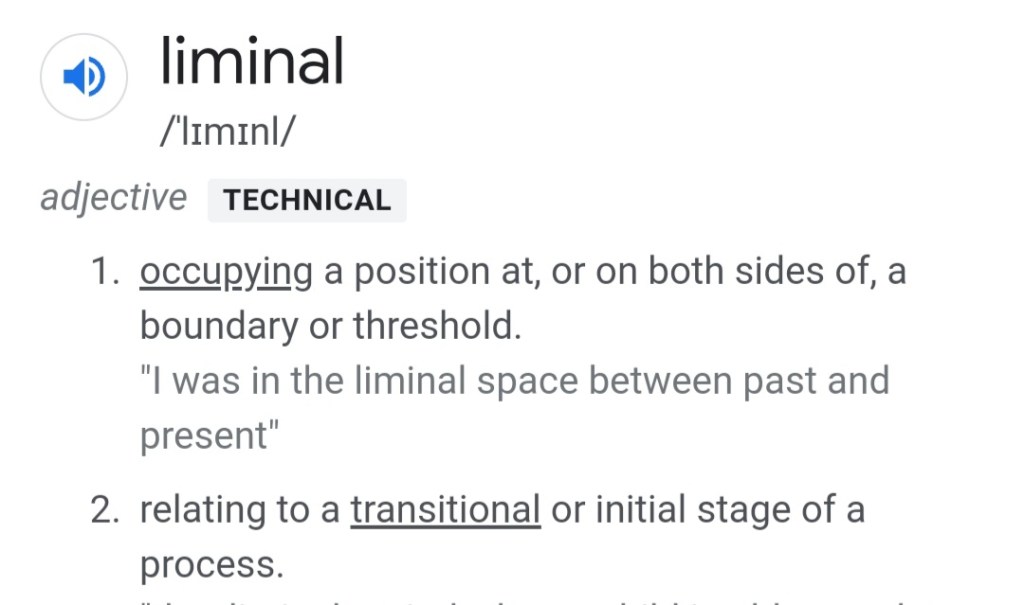
And so in light of this awesome fact, we need to re-apprehend the nature of such forms of governance as that directed by Sir Charles Windsor and his polity and conceive afresh that which constitutes a most compatible functionality of this governance relative to the Commonwealth of Nations. And so that is why his role is essentially a Prime Ministerial role, although it is an umbrella one, which in some senses guides all the other local Prime Ministerial roles in every Commonwealth nation. And while this shift may be on many levels imperceptible, it is nevertheless occurring because it needs to happen in lieu of paving the way for the Kingdom of God to complete Its divine task of re-instating Its divine right to rule the earth without all the meddling, interference and tyranny of the ancient adversary to this divine right. See, the Devil is God’s adversary and he has set up blocks of power against those forces that are united with God’s will relative to the nature and order of everything in the universe. And sometimes these blocks of power influence the way language and ideas intersect. And more often than not the Devil will try and sow confusion into the myriad situations that face our world. One way of ironing out this confusion is to make some things streamlined in a certain way – not everything though because it aint suitable for everything to become streamlined this way or that. The way that seems most fitting in this current context is a liminal one – one that merges ancient tradition with present day reality in the structural sense.
For this is the way to offset the tyranny of worldly rulership. And I do think Charles Windsor has his boots on the right way in this respect. There is alot that is decidedly nuanced about him and the way he does things. Forgive my penchant for political comparisons but I think him and Anthony Albanese have quite alot in common which is also why, I might add, I voted for Albanese in Australia’s last federal election. There is a unique sense of balance and poise in these two personalities which I think adds verily to the sustenance of good-will in the political sphere generally, both locally and globally.
And while some readers may think or find it a bit uncharacteristic of such a blog as this to focus substantial attention on politics, it must be noted that the political and the spiritual are never mutually exclusive. It is a myth, and a hugely popular one at that, which says ‘the Church ought to be apolitical’. That idea is grossly oxymoronic! It is so ridiculously unrealistic because if you know anything about the Bible, a large proportion of it deals with quintessentially political themes. Mind you, these themes have a superlative spiritual backdrop, as all themes in life actually do, whether we are aware of this or not, whether we ignore this or take heed of it. And moreover, we can see the vitality of the intersection between the political and the spiritual from this most recent of swearing-in ceremonies. This intersection has been in place since time immemorial. For not only are the political and spiritual not mutually exclusive, but they are inextricably linked since God being both Creator and Ruler has inset these themes into relational motion within the fabric of natural law and so the whole dynamic order of the universe is arranged in such a way that it is hinged most intricately upon the necessity for balance in the way the precise means and processes of life unfurling make their journey through time and space. Hence the need in the context of our own personal realities to balance the personal and the public in accord with the designs of God’s holy will, thereby forsaking worldly schemas – that is, schemas that put God’s value system last or leave it out of the picture altogether. And this is no instantaneous mastery. It is a learning process with more often than not a steep hill to climb. And why it is probably apt to leave you all here with this fabulously timely quote from St Paul…..
“Do not conform to the pattern of the world, but be transformed by the renewing of your mind. Then you will learn to know God’s will for you, which is good pleasing, and perfect.”
(Romans 12 : 2)
Keywords: Swearing-In, House of Windsor, Ecumenism, Commonwealth of Nations, Papal Enclave, Liminal, Mitre, Tridentine.
Photo Credits:
1. Personal snapshot from live telecast
2. Google dictionary
Discover more from My Catholic Blog
Subscribe to get the latest posts sent to your email.
 My Catholic Blog