Commentary
Now, I want to draw your attention to something very important but unfortunately not acknowledged much or thought about next to nearly enough. There was a time in St Faustina’s life when she was confronted by a vision so terrifying that it caused her to wonder what it could all mean in-full. We know, she was given the immense grace of not only receiving the Divine Mercy revelation but also to have gone home to her Eternal rest before the war began in earnest.
The vision she saw is one that will serve us well today as a stern reminder that we cannot afford to become complacent and just live life as if everything was simply at our disposal to enjoy all the time, whenever we wanted, without much care for anything else which, by virtue of our in-built God-given human disposition for conscientious thinking, should at times cause us at least some measure of vexation. I heard another story too recently, from a video on YouTube about the lives of the Saints.¹ The story impressed upon me so deeply and somewhat vexatingly because it made me think of not only the story Jesus told about the man who just spent his days filling up his barns while he was making merry all the while with his friends until one fateful night he gets visited, much like Scrooge in Charles Dickens’ A Christmas Carol, only to be told that the Lord God wants this very night, an entire account of his life! And the YouTube story was of a similar such man who was visited by St Vincent de Paule. As they conversed, St Vincent learnt that this man was a masterly man who had never in his life known the meaning of affliction. Apparently, he, like the Rich Man in the story of The Rich Man and Lazarus, was someone who, day in day out, gloated carefree over his contentment and besides, the impression is given that this aristocratic man did not care one bit about the sorrows of the Le Misèrables. And that is what vexated the heart of St Vincent so much that he prayed in earnest that this rich man may know something about what it is to learn regarding the struggles and hardships poor folk endure like those he most likely chattelled. We see here a French rendition of the Ebenezer story Charles Dickens told, as told through the eyes of a Catholic saint, St Vincent de Paule. We must also appreciate something about the pre-Revolutionary times in which St Vincent de Paule lived, i.e. that they were stridently similar to those of the Dickensian era in Britain. I learned much more about this too a couple of weeks earlier, from another video which I saw via EWTN on Demand, and this documentary was entitled Pilgrimage to the Museum. What an eye-opener that was! It told of the subject matters and thematics of the pre-Revolution French Roccoco painters. A number of these artworks depicted the French social elite spending their days in much leisure and these paintings attempted to capture the unbridled vain excess that this leisure entailed. The descriptions of the ways in which such excess was flaunted was both lewid inasmuch as it was frightfully disturbing.
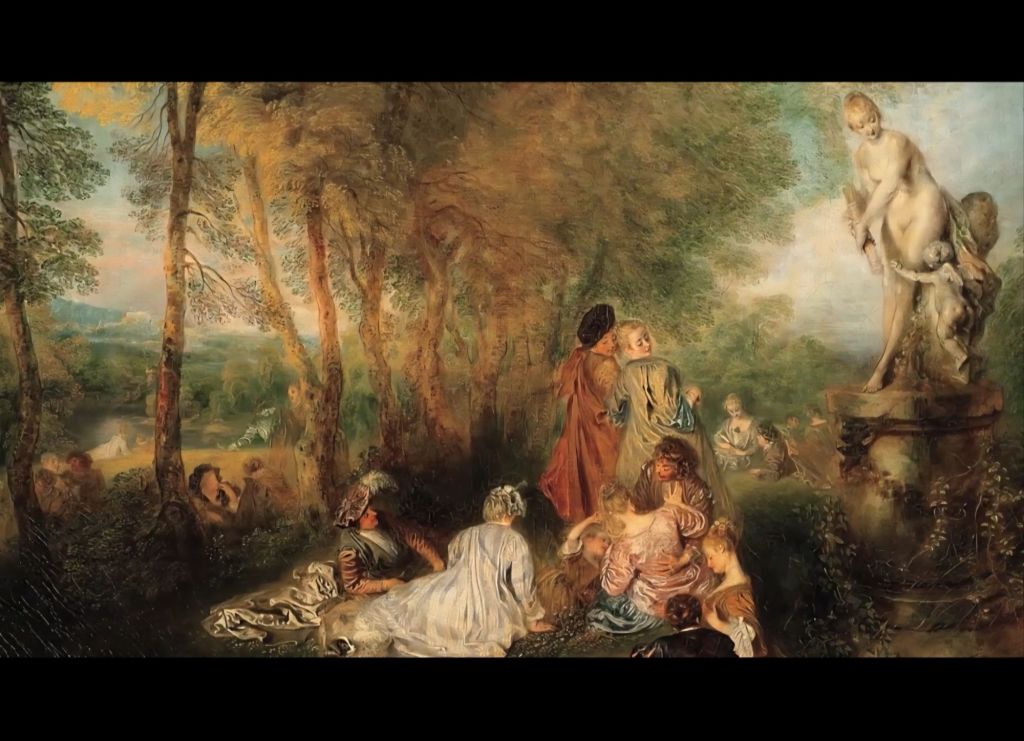
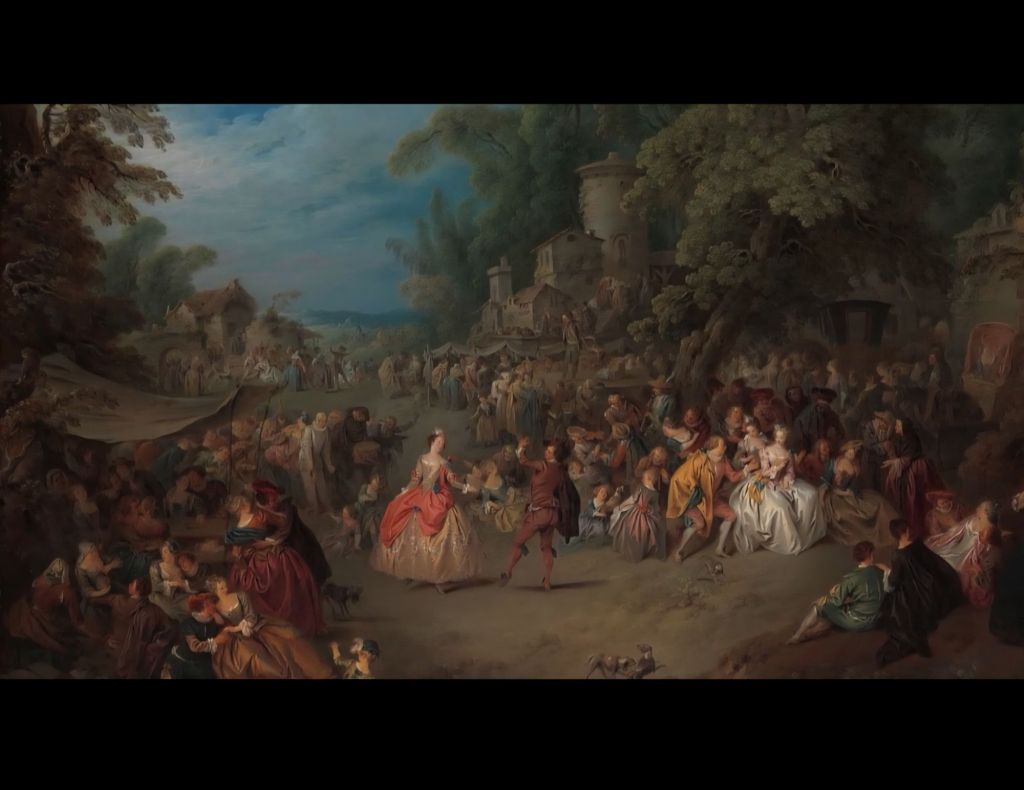
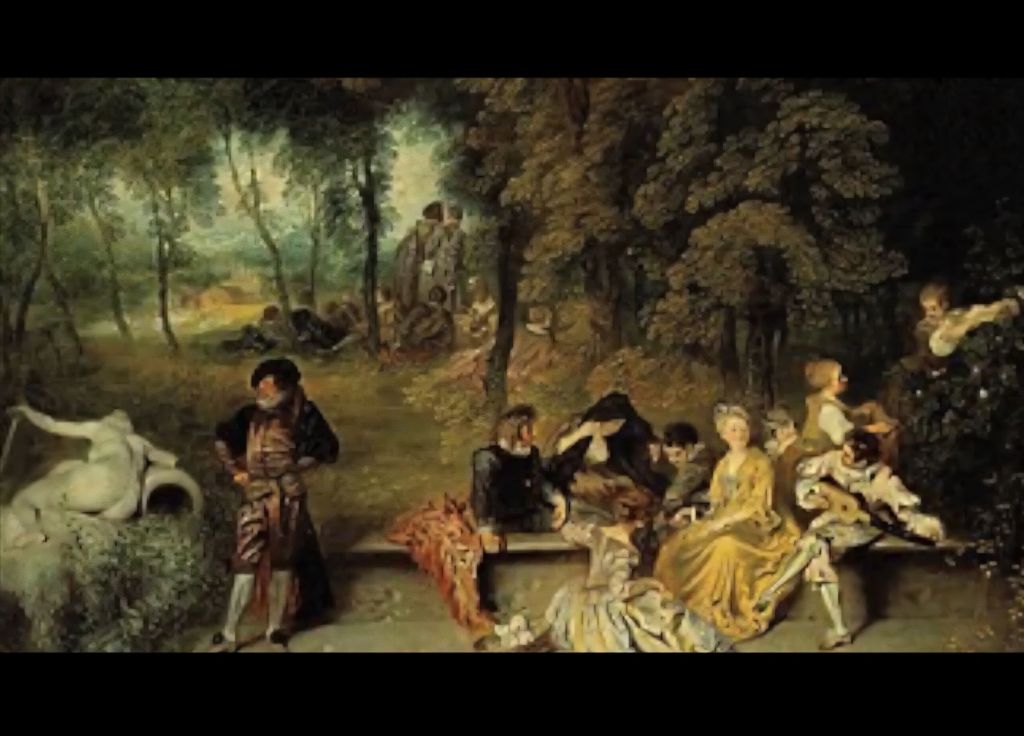
Moreover, at times, leading figures in the Church hierarchy were depicted to be cavorting with these flaunty social aristocratic scenes and this was told through the vingette of another EWTN biopic about the life of St Jean Vianney.² And yes, I am straying somewhat or meandering from the topic I originally opened, and that was about St Faustina’s vision. But there’s purpose in this meandering. To show you the myriad linkages between these other stories and her vision, and between too, her vision, these other stories, and one of today’s most challenging problems: that of smug indifference, apathy, and a pervading unsettling spiritual tepidity within the Church at the local level. And yes, I have also italicized the word smug, precisely because the emphasis points to the heart of today’s indifferece problem. When I go to places overseas like Singapore or Kuala Lumpur for example, I find that this terror of smug indifference in the atmosphere of public places is for the most part, much less viral or exascerbated than it is in a city like Melbourne. Here, it seethes, oozes virulently and perniciously from the people who crowd the city streets and street-cars. And a great swathe of the people that such smugness issues forth from are students or young workers, many of whom are obviously from a great diversity of backgrounds, be they from here or overseas. And so, when I read the article from ABC News that forms the backdrop of my commentary here, it doesn’t surprise me that there was found to be rather poignant in the attitudes of those interviewed, an air of carefree or smug indifference to the anti-immigration rallies and the hostile sentiment that these mass gatherings tried to sweep up into a flurry of hysterical outrage, albeit all wildly non-sensical nevertheless. The reaction of one student, namely Mihir Kuvadiya, is particularly painful to bear considering racism is a reality and has been for many who have had to bear the brunt of someone else’s scapegoaty discontent, and I will tell you now that I am certainly no stranger to such racism, even though I was born here in Australia, hailing from a mixed Eurasian background. In fact, I grew up amidst it, in and amongst the variety of schools, including Catholic ones sad to say! It was brutal and vile and it constitutes an outrage and sacrilege against LIFE. Hence my rage against the smug indifference of those who have never experienced it despite being from a cultural background considered to be taboo by racist ignoramuses who still believe in the ghastly lie of so-called ‘white supremacy’ and related evils such as eugenics. So now back to St Faustina’s vision:
She saw two roads. One had a sand-coloured backdrop where the passage was really wide and there were flowers and people were dancing around, making merry with music and all kinds of worldly pleasures. They were just so carefree and seemed contented in every way that life for them was a non-stop party. These people had no idea of where they were going as they travelled along the road and they didn’t particularly care. And so they continued on dancing and partying and living life ad though nothing else mattered except their “women, wine, and song” until one day their travels took them by surprise to an abrupt cliff’s edge. There they beheld a precipice with a cavern that went deep down and it was all ablaze with fire but they just couldn’t stop walking along that way and as such were engulfed by the flames.
The other road she saw was very narrow and rocky, and it was strewn with thorns. The people on this road were full of sorrow, carrying many burdens. They were crying as they went on their way and some fell down but got up and continued on. At the end of this road was a huge garden, “magnificent” and “filled with all sorts of happiness” and all these people on this road who entered there, once entered, “at the very first instant, forgot all their sufferings”. (Diary 153)
We need to take stock here of two very different but in some senses nevertheless related renderings. Firstly, it is commonly accepted that St Faustina was seeing a vision of the difference between the broad road to perdition and the narrow road to life. And yes, it can be said to ultimately pertain to the spiritual life and how the Biblical two-roads narrative taught by Jesus needs to be seriously factored in to our lives and particularly the depth and breadth of our lived experience so that it causes us to jump back in order to recognize at first and then ask ourselves, upon which road are we travelling? I certainly would prefer the 2nd road to the 1st, for the 2nd one she described is the narrow road that leads to life.
I think too, in many respects, we can also use this imagery to assess how it is that we are all travelling through life in a bigger-picture sense. Are we availing ourselves of the opportunity to learn about issues and concerns that assail the wellbeing of people in our midst, in say society at large, though not necessarily those people we personally choose to associate with? Do we actually care in our hearts about the things that are going on around us such as these disturbing events in our world, be it the henious military conflicts in the Middle East & other places or rallies such as this latest anti-immigration rally which really unsettles me and makes me question what is it in our society now that is causing these pernicious influences to become more vocal? I would also like to stress that because St Faustina lived just prior to the onset of the second of two of the most devastating calamities of the 20th century, it wouldn’t surprise me that this terrifying vision contained a prophetic warning about the impending horrors of the Second World War. For the imagery, particularly that of the first road, resembles too much of the social-cultural milieux prevalent during those days while that of the second, appears to convey the heavy trials of those more fortunate ones who survived the firey ordeal of wartime by finally procuring a safe passage to either Britain or the United States. In light of the first road, we deduce that the so-called Roaring Twenties was a time when the general societal mood was one of carefree libertarianism. People descended into the quagmire of moral decrepitutude as though it was synonimous with joy when in actual fact, nothing could be farther from the truth. And by moral decreptitude, I mean that their ways of doing things became lewid and full of vain excess pretty much akin to that of the aristocracy prior to the French Revolution and during those tumultous times after. They ate, drank, gambled, partied, and flaunted their way through life thinking that life holds very little meaning other than to “eat, drink, and be merry for tomorrow we die”. And because social vices were on the rise, the sensitivity of conscience gets dimmed and soon, the further one goes down that path of concupiscience, one’s proclivity to sin (without being nudged by one’s conscience) becomes easier to fall into as though by second nature. Hence the fact too, that a great many people who lived in Europe just before the 2nd World War did not think it a very big deal when the Nazis started rallying and making alot of political noise. In Germany and German-allied countires for instance, many thought, (even Jews too), that it was not really such a big deal since they were of the firm but naiive belief that because their place in German society as refugees who sought asylum from way back, 70AD onwards to be precise, they therefore had long, ancient historical roots there, and they were consequently of the opinion that their place could never be forcibly shaken or uprooted from there. Little did they realize as to the grave error of their complacency. For complacency can become complicitency if and when remaining constantly and habitually unchecked. And that’s why my inner self shrinks aback in horror at the thought that people in our time could be just as wantonly naiive. After all, all you need to do is look at this here to see that many are becoming pervertedly extremist in their outlook, often without really realizing the potential socio-political hazzards they are promoting:
https://www.abc.net.au/news/2025-08-18/sovereign-citizen-movement-law-court-four-corners/105655100
SPAWA! Terrible!! They still want a worldly social hierarchy only with them so-called ‘average people’ at the top!!! SPAWA stands for Sovereign People’s Assembly of Western Australia. And get this – these mock courts, trials and quasi-legal system actually make me think of the Nazi Party in Germany before they took power by a coup de’teat because they used to do this exact same thing….hold mock trials after forcibly arresting Jewish citizens or political opponents even when they were not officially in power. It was a set-up of a preliminary reign of terror by this self-styled paramilitary group taking the law into their own hands. Well, this group forcibly took power around 18 months to 3 or so years later. Bids me also to think William Golding’s Lord of the Flies.
A scary thought when you consider who the Nazis actually were and what they ended up doing.
So, there are many reasons why we need to become unstuck from smug complacecency be it in the Church or out there in the wider world. For there is a sickening fascile passivity that has held countless Catholic parishionners captive for decades in this country and that is a passivity that presumes it is simply ‘keeping the peace’ by keeping out of peoples’ way, by just taking for granted the socio-political freedoms we have here, and this type of passivity habitually refuses to think. In refusing to think on the deeper and more pressing things of this world, such passivity dulls the spiritual senses and kills the desire to pray and to conscientiously seek God’s direction in the matters of everyday life. For it would also do us well to recall that St Josè Maria eScriva always, and without ceasing, exhorted people in the ways of making everyday life a sacred duty rather than merely living it out as mundane monotony.
In our time there is a tragic sense pervading society in general that points to the nihilistic demise that took hold after the turn of the 20th century, with such a nihilism pervading the undercurrents of socio-cultural evolution, and so much so that it caused both World Wars I and II to engulf the planet. I cite again a theme drawn from the EWTN production Pilgrimage to the Museum where Fr Shawn Aaron from the Legionaires of Christ, tells us that after the First World War, and certainly after Nietzsche with his so-called “death of God” theorum, there is a pivotting of the events-threshold between the close of the 19th century and opening out of the 20th that is key in ascertaining the whys and wherefores of both the First and Second World Wars and how out of the abysmal depths of both, there bespoke a lingering spectre of nihilism whereby a great many people who were living after both World Wars fell into the in-part necessary but also somewhat dangerously shallow vision that we need to forge our own path, the classic fateful beginnings of the contemporary catch-phrases I did it my way and You can go your own way. I call this the anathema of banal self-sufficiency. This is an outgrowth of the nihilistic seepage into the social mood and zeitgeist of that tragic acceptance by atrition of the ‘death of God’ whereby it has been all along more of a subconscious succumbing-to rather than an outright and wholesale embracing of, although there have been, amidst all the sweeping chaos of the war periods and their respective aftermaths, pockets of complete unbridled collective selling-out to gross libertarian nihilism, and I think especially too of the so-called Sexual Revolution of the 1950s, 1960s and early 70s. Fr Aaron cites that during those 20th century periods, particularly that of coming out of both the First and Second World Wars, there really was a “pessimism, a nihilism, that God is not here and even if God does exist, it really doesn’t matter, we’ve got to forge our own style, forge our own way forward…” ³ Although in some respects he was making a short reference to the trajectory of evolution in artistic style, I also think he was making a deeper and more profound statement here too about the socio-cultural, political, and indeed spiritual implications of these seismic shifts in the collective psyche of society at large. And if we think about it, there were those too who claimed affinity with the faith of the Gospel and indeed with the Catholic faith, who were caught between these worlds so to speak, that is, between the world of secular thinking that had imbedded in it dangerous undercurrents of nihilism and the world of the Church’s spiritual life. However, the latter unfortunately for many, was solely relegated to practicing the faith exclusively on Sundays by going to church or to Mass outside of which, ninetyeight percent of life went on as per usual without any or next to little or no reference to the spiritual life, save perhaps attending weddings, funerals or baptisms on odd occasions, and the other sacramental rites of passage specific to Catholicism.While those things are normatively routine and for the most part essential, they are by no means enough. And so this really sets the scene for where we are now in the 21st century. And I am utterly convinced that much of the smug indifference we see abounding out in the wider world, in our cities and towns, is an outgrowth of this long trajectory of peoples’ everyday life being utterly soaked in a robust marinade of secular nihilism all the while, and if they happen to claim any allegiance to faith at all, their practice of this faith is either nominal but for the most part habitually non-existent or auto-pilotedly habitual but in terms of spiritual depth, almost threadbare. And this is what Archbishop Fulton Sheen called out as luke-warm, shallow, and dangerously close to succumbing one to the seething ubiquitous deception of the anti-Christ – subtle, and almost bearly discernable for those who are unaccustomed to understanding the various movements of the spiritual life.⁴
So what do we make of the cantankerous noise of right-wing extremism that we are seeing, attempting to stake its fallacious claims out on the streets of cities around Australia this weekend past? I think it points to a number of key things that as faith-filled people, we need to take sight of and generously heed instead of turn a blind-eye of smug indifference.
Firstly, we need to become far more spiritually educated about our faith both in rudimentary terms and in much more depth. We need to have a heart in solidarity with St Josè Maria eScriva and his spirituality too in order to understand how much more full of faith, hope, and true charity we would become if we simply and sincerely spiritualized our everyday lives with the ardour of seeking God’s will in everything we experience from one shifting moment to the next. This will assist us in opening our eyes and hearts to the vital importance of having that feeling for the sufferings of the other. We need to familiarize ourselves and to some extent, soak ourselves in the feelings of engagement with that suffering so that we can disengage ourselves from the slow death of conscience that smug indifference causes. It might also do us well to recognize that there is almost an idolatry of distrust in feeling which has blindsighted even those in Church leadership positions to the point that you will hear them preach against what they label ’emotionalism’. These pundits claim, albeit falsely, that emotions should not be listened to and cannot be trusted and their basis for this argument is that today’s secular culture is ‘saturated in emotionalism’. I get that. I get that these people who preach this stuff are fed up with superficial and often inane hype that comprises what I would call a hysterical debauchery of the soul. Such debauchery descends one’s humanity to depths that seriously endanger the spiritual and human integrity of the person. And no, it’s not about so-called ‘animalistic instincts’ either, for animals rise above humans in their innocence and precisely because it was us, and not them who took the bait of Satan and fell. Actually, when humans descend into the dark depths of debauchery, they lower themselves below innocent animal life and become more acquainted with fallen angels because innocence is wantonly parted with if not scorned altogether. All you have to do is look at these unsightly Neo-Nazi demonstrators rallying to incite more fear and mistrust of “those people from elsewhere” or the dark flambouyant hedonistic glam of today’s pop-culture to see the true meaning of hysterical debauchery and flagrant emotionalism. But to use a very trite but nonetheless fitting phrase, well-meaning preachers like Fr Leo Patalinghug who sometimes warn against a sensationalistic emotional engagement with the faith cannot afford at one and the same time to lead people astray in ‘throwing out the baby with the bath water’.⁵ There are feelings and there are feelings, get what I’m saying? Therefore, it is critical that we discern rightly between which of these feelings are God-breathed, which of them are the healthy by-product of the Holy Spirit nudging our consciences or our desires and motivations, and which of these are coming from our human faculties which have as yet not been purified. This is absolutely vital. Because the devil wants to distort our perception of who we are and who we are supposed to be so that we miss the whole point of why God gave us emotions in the first place. The problem with this too, originates in an extreme over-scrupulosity about the virtue of temperance or self-control. Sure, we need temperance but we need to learn to clothe ourselves in a temperance that doesn’t quench the fire of the Holy Spirit. To put on otherwise is to put on a worldly hardness of heart and that grieves the Holy Spirit. Self control is not a hardening of one’s heart. It is a discerning attitude which operates as an interior compunction that regulates the outflow of our interior responses to things going on around us or things that directly engage our earnest participation.
Secondly, we need to seriously grasp on a deep interior level the utmost importance of learning from both our personal past and our collective past. It’s not about unhealthily ‘dwelling on the past’ but it is about having the fortitude necessary to go there and learn about what God wants us to take serious stock of in relationship to our present circunstances so that our future does not get consumed by unresolved issues and themes from times gone by. And on this topic, I think it’s also fair to say that because of the gross contemporary confusion sown about the Mid-East conflicts, particularly the ones involving the Israeli state, there has been a gnawing distortion of perspective eating into and warping the understanding of many who claim to be anti-war. Sadly, as a result we see a disturbing trend whereby many people who claim to be anti-war falsly equate Jews with war-mongering, all because the current Israeli prime minister, Benjamin Netanyahu is an autocratic extremist. He posits a kind of Jewish Orthodox extremism that matches in many ways that of Islamic State extremists, and not to mention, Nazis. And this has spawned a hot-bed of confusion. But people need to wake up and regain the sense enough to recognize that a dictator is just that: a dictator, regardless of their claimed religious affiliation or racial background. Other examples of this kind of dictatorial war-mongerism abound on the African continent, and in many of those countries, there are self-styled rambo-like political king-pins who lord it over their subjects with an iron fist and also bring countless misery to the citizens in neigbouring states or countries because these dictators are only interested in spreading themselves and their power wide and far. Ironically, these same people who claim to be peace activists and who also albeit rightly decry the Israeli state for their ghastly savagery never bother to make mention of the equally ghastly reality of certain war-mongering African states like the DRC, and most likely, in choosing to ignore those realities they are pandying into a popular rhetoric, a myth of political-correctness that seems to aquit some groups but condemn others, yet on another level, especially when seen from the reality of their respective tumultuous histories steeped in all manner of strife, as particularly concerns the issues of slavery and anti-Semitic persecutions from Biblical times onwards, there is very little difference between these groups and yet one is blamed in our more recent times, while the other isn’t. This folks is none other than the promulgation of an ugly double-standard and this is why too, it certainly will do us well to remember that Jews were racially villified just as much if not even more so than Africans. When you say you are against racism, you must object to it full-stop and that means without manufacturing or promoting double-standards. Without being presumptuous, I will take a wild guess and say that the proliferation of that Neo-Nazi menace on the streets of Australian capital cities last weekend was a symptom of the failure of many contemporary so-called anti-war campaigners to address the real presenting issues in a sensitive and truthful manner. There is no wonder too, that in some sections of the Jewish community, understandably complaining about anti-Semitic racism directed at them by those who claim to be anti-war and who claim to side with the victims of this henious conflict, is rife. I must also reiterate the absolute absurdity of this mud-slinging about anti-Semitism because even Arabs belong to the Semitic genus of the ethno-linguustic family as do Ethiopians. That said, I heartily sympathize with my Jewish brothers and sisters who feel jilted and betrayed by those who claim to campaign against both racism, xenophobia, and war and yet think it is now perfectly fine to blame the Jewish race for all the ills befalling those regions of the Holy Land tragically ravaged by war. And so last Sunday, the Nazis showed up! Irrespective of the fact that Nazis are never a good thing, this incident was more like a sign that something is seriously amiss in those echelons of civil society that claim to be peace-advocates and campaigners and yet, get this – they somehow think that perpetuating the myth that Jews are to blame for the war full-stop, (just because Netanyahu and his modernist puppet Israeli state are a bunch of power-hungry sadists) is completely and utterly legitimate! You gotta be kidding me!! That’s making the Nazis come out in droves because you are now all-of-a-sudden touting a myth they have perpetuated themselves for literally decades since the very beginng of their crazed ideological dissemination. Regardless of whether contemporary peace activists are willing to understand this or not makes absolutely no difference to the fact that the promulgation of anti-Jewish rhetoric regardless of who it is that spouts it, is completely and utterly unacceptable. Get off your high-horses and get a grip on reality! It’s not Jews who are to blame for carving up Palestine or for injustly creating an apartheid-like divide between Palestinian Jews and Palestinian Arabs, it’s dictator-mentality that is responsible. It’s also an unhealthy obsession with militarism and boosting an arms-race to power that is the cause of the problem. Jewish people though, as a race or a religion or a culture with a shared history, are NOT the problem. Give guns to any fledgling de-colonizing state, be it in Africa or the Middle East, or anywhere else for that matter and the locals will most likely become obsessed with power struggles (unless of course they have enough sense and good-will ruling their hearts and minds at the time to reject the tempting offers of weaponry and armaments in the first place). This is the nature of evil and why it is so important to recognize that the colonial powers of Britain and the United States did a very foolish thing when they ceded their territorial paternal oversight to the locals who had not first and foremost been given the encouragement or the opportunity to dialogue openly with each other and by “locals”, I am referring to both the populations of extant Palestinian Jews and Palestinian Arabs as well as the Jewish refugees from Europe who were promised asylum in the form of repatriation to their ancestral homeland. Instead of helping an atmosphere of dialogue to flourish, the power of the gun began to speak louder than that of diplomacy. Hence we have the 1948 origins of today’s problems. And this is why I need to emphasize the importance of not blaming this culturo-ethnic group or that one because it’s not the fault of Jews or Arabs, rather, it’s the fault of misguided decision-making and the favouritism of certain political interests over and above the ethos of peaceful dialogue and reconciliation. Hence the need to start over on a completely different set of terms & conditions. A set that has at its core the favouring of building relational fraternity through dialogue and reconcilation over and above any other means so that military might is not the central focus of running a country but rather, that the valuing of human dignity alongside recognizing the sacredness of the wider creation ought to be given absolute priority in the entire scheme of things.
Postscript on the Nature of How Secularism even used Roccoco to Bend Its Bow and Other Matters
Stephen Auth makes the observation that
“in the 19th century….in the 1800s, Europe is slipping into a secularism, and the art has shifted from the roccoco interior decoration projects to mostly, call em propaganda projects for Napoleon or whoever, and art’s kinda lost its way and it’s kind of exhausted maybe its approaches to different themes and, that creates this aesthetic change called “realism”, which is really started by Monèt, that really shifts the orientation of art from describing something greater to describing nothing actually, and…it becomes art for art’s sake…..” ⁶
I would go even further to say that way before the 19th century, Europe was already secularizing, and that once the sacred art themes of much earlier periods gave way to much more secular ones, say with the advent of roccoco (considering its overtly hedonistic subject emphasis particularly evident in the French field), you have a real projection to the onlooker of a message that says definitively, many people have lost their way and are travelling the broad road to perdition. I mean, if you look at the real meaning and the socio-cultural & political narrative and implications both in and behind the roccoco genrè, nevermind the Napoleonic successors right, it soon becomes clear that all the debauched excess alluded to therein is a sure indication that rememberance of God is becoming dimmer and dimmer within the collective psyche, and this banal disintegration of both His rememberance and a true, contrite & humble honouring of God within the fabric and context of everyday life just becomes more and more rampant to the point where the natural foregone conclusion is the nihilist tragedy of ‘the death of God’. It’s not that God is actually dead because the fact of the matter is, although He did die in atonement for our sins as the 2nd Person of the Most Holy Trinity, God cannot remain dead. If we look at this nihilist scenario from the perspective of Jesus’ own death, the whys and wherefores of how it was that He came to die for us, we will inevitably come to the realization that all our collective sin: the folly of disobeying our Creator, the greed and lust, the idolatry and deceit, the unwillingness to love – all of this – whether its bound up in our personal lives within the intricacies of our relationships with ourselves and others, or whether it’s ingrained in the imbalanced and inequitable systemic nature of certain socioeconomic and political infrastructures that invent and impose unjust or immoral classifications and segregations, the inevitable result becomes, as Nietzsche said: “God is dead, we have killed him” meaning that by and through our persistence in our iniquities, we have procured the death of God in our midst. The more we persist in our proclivities to sin, the further seperated we become from God to the point that the magnitude of our sins banishes His sacred presence from our midst. And this is the tragedy too of pervasive secularism because what it does is that it closes off peoples’ hearts to desire entering into and maintaining a living and therefore meaningfully nourishing relationship with God. Secularism lulls them into the false sense of security and false consciousness of being ‘A-Okay’ without God since the myth of ‘I can do better without him’ rules the roost but eventually spoils and ruins the pie for everyone. After all, what did all our sin and all the evils cause God to have to do for us so that we might not eternally perish as a result of our own folly? DIE. That’s right, die. Because He knew sin put a great chasm of emnity, death between us and Him. But in order for that chasm to be mercifully closed, God the Father had to send His own Son to die so that in and through His death, there would be a great cosmic spiritual expiation of everything that was caused by our Original Sin and all the subsequent sin thereafter. But death was not the end, which was the even greater and ultimately victorious mystery. Hence the triumph of Christ’s resurrection as the perfect exemplar of our God-ordained eternal destiny. But in the midst of our earthly existence, God beams down to us from heaven above the lessons we need to take stock of, and he does this at times through the narrative of our own history. For that history is a tapestry of lessons which God begs for us to heed and learn robustly from. Our descent into a forgetfulness of Him and a avid unhealthy preoccupation with the stuff of our own making, with all its vanity, avarice, escapism, and denial leads once again to the tragic death of God’s presence amongst us. Why is it people prefer living amongst themselves seperated from Him? Why do they act as though they prefer Hell to Heaven?
I get though what Stephen Auth might be trying to say when he remarks that “realism….shifts the orientation of art from describing something greater to describing nothing actually.” ⁷ He’s implying that there is a process of concupiscience occupying the transition from roccoco to realism in that the roccoco can be equivalentized to the process of getting or becoming intoxicated whilst realism is where you end up on the other side of the binge – i.e. hungover and spent. It’s the proverbial dead-end that all hedonism plunges into as though by autopilot. It is the foregone conclusion that now, we have arrived at “the morning after”, that fateful time when the party’s over and we are now forced to take stock of the real consequences of our lack of sobriety. And just how spiritually symbolic that is, is none other than mindblowing. Because sometimes, God has to bring us to Rockbottom before we can truly live again and live life anew. The other aspect to our observation regarding how the artistic transition described by Auth is a depiction of concupiscience descending to flattened depths of dealthly realism is that not everyone takes the morning after syndrome that seriously. In fact, most don’t. They instead attribute a mere medical explanation to why they end up feeling the way they do after a hard night’s debauchery.
And Auth goes onto say “….and I think you can’t understand realism until you understand the spirituality behind it so what’s happening is belief in God is fading and so finding God in art or using art to lift up our senses to God seems to have lost its purpose.” ⁸ As an aside comment, I don’t think roccoco necessarily did a very good job of lifting up our senses to God either since it was primarily used for the very worldly purposes and passtimes of decorating the walls and interiors of aristocratic villas and thematically it tends to pull viewers into a world of frightful frivolity and actually, for the spiritually unaware, relishing these kinds of hedonistic scenes from the roccoco period can distract people away from seeking that which is more important in life.
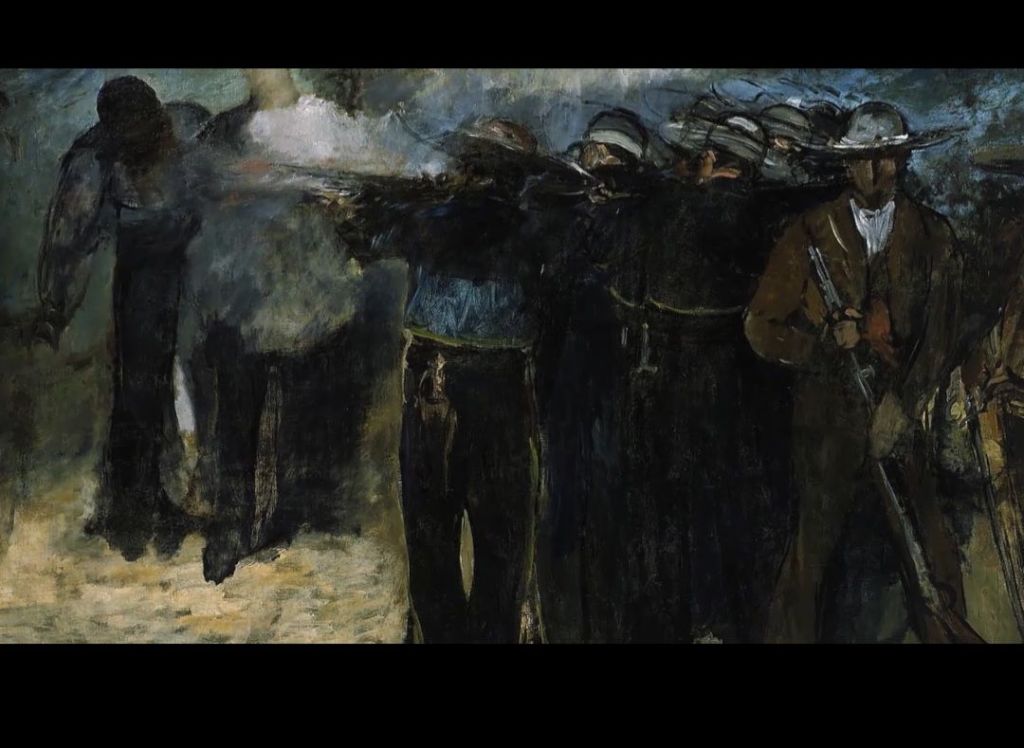
However, it becomes clear to me too that when looking at the array of realist paintings glimpsed in this video, you cannot honestly say that in everyone of these paintings, the persistent theme has actually and unequivocally degenerated from the supposedly “saying something greater” of the roccoco period to the again supposedly “saying nothing at all” happenstance of the realism period because regardless of the specific genrè, we can dare to read, as was posited by Fr Shawn Aaron earlier, that a decisive social commentary on the spirit of the times is evident in all of these artworks whether roccoco, realist, or otherwise and what’s more poignant is that where there is a focus in the painting, to try and shift the consciousness of the observer from one of just meaningless aesthetic and contextual trivia toward a higher and more enlightened socio-cultural and indeed spiritual focal point, that ought to be our objective in rendering meaning from whatever visual landscape we set our eyes upon. Just look at the realist painting pasted above. When I first set my sights on that, I instantaneously thought of many spiritually pertinent issues in our world today, especially the futility and tyranny of war. There’s also paradoxically a martyrdon theme. So, I think Stephen Auth misses much of what’s actually there and instead jumps to superficial conclusions about what he sees based upon certain facts or quotes attributable to the artists themselves. For instance, he cites that Monet is now painting just because he enjoys painting. And he moreover concludes from that that this somehow means that Monet is essentially disconnected from the higher vocational purpose of his work. I couldn’t disagree more on that point because you cannot presume from just one small statement that quintessentially describes Monet’s mood for that day or week or whatever, that he must have lost sense of his higher purpose. Afterall, the fact that he states he is painting just because he enjoys it does not for one moment imply he doesn’t at one and the same time intend to give glory to God through that simple enjoyment of painting. This is where I think it’s important to look at more astutely such positions, (even those taken by the artists themselves, particularly when they have not expressly stated they reject any notion of higher purpose or vision) with something more of the understanding that Fr Aaron was imparting to us about the necessity to see how each genrè can afford us a window of opportunity to learn some vital God-breathed lessons from these various epochs that went before us. And more especially in our time now, contemplative reflection on these various themes explored herein offers us the opportunity to grow, transform, and enhance our appreciation for the pivotal moment we ourselves have been placed in by God. For a time such as this is a time where in which we can boldly and humbly too, strive not so much to forge our own way forward, as to diligently strive to discern God’s will for us in light of our responsibility to be co-sharers in God’s redemptive work, to be Christ’s heart, hands, and feet in the world around us both in our private and public spheres of life.
It’s further haughty and presumptuous to state, as Stephen Auth does, that Monet painted Rouen Cathedral with a intentionally dismal emphasis – i.e. no light, dark windows etc. because I have heard it said otherwise about Monet’s impressionistic style from that period – that he painted that way because he was rather advanced in years at that stage – in his late 80s and that his eyesight was becoming retinally blurred. Hence the mirage effect permeating many of his works from that period. Okay Auth gives Monet the benefit of the doubt that he did not consciously or intentionally “paint God’s tomb”. But then again, what Stephen are you trying to say here?? We all know that Jesus spent the night of Good Friday and Holy Saturday in the tomb! I also get it that you are probably punning on the societal demise thing due to the ‘death of God’ in (much although not all of) the collective imagination. But really and truly, I think you are sorely missing the point as to why Monet painted things the way he did. I’m gobsmacked it hasn’t occurred to you that Monet was almost physically blind! And for that you ought to have a more compassionate understanding of the most likely reason he painted the way he did. Moreover, I do not like your judgemental tone about Monet’s spiritual crisis as it appears that he had one so for you that is an obvious slap on Monet’s wrist rather than something which ought to be treated with much more sympathy or understanding since in reality, God is the only one who can judge the true depths of someone’s soul, we humans cannot and should not do that although we are called to make discerning distinguishments between what is morally efficacious versus what is morally harmful. But I just hate the way Auth gleefully snubb people like Monet as though they are intentionally evil and the way he judgementally says about or to them with a sardonic grin that “God can kill you!”.
The intellectual snobbery in his outlook is so scathingly painful to bear that I am wondering did EWTN call upon him to air his stuff more to the point of setting him up in the role of a Devil’s Advocate insofar as his lauding of Phariseic takes on life goes? I am just thankful though that the spiritual abrasiveness persistent in Auth’s outlook is marvelously countered and tempered by Fr Aaron’s much more redemptive emphases.
Moreover, I will also stridently contest Auth’s take on the Hopper painting shown where it depicts a lonely looking woman sitting by herself in a cafeteria. Auth implies that this painting shows that God is dead in that woman’s life because she is shown to be sad looking without companionship. His attitude towards that woman oozes with smug Phariseic complacency, the kind which boasts (something like the Pharisee in the Temple comparing himself to the Tax Collector) – thank God I’m not ‘a reject’ like that loser – after all, she’s spiritually excommunicated, she is completely severed from any meaningful relationship with others as ‘brothers and sisters in Christ’ , and so, God is to be reckoned as good as dead in her life!
Since when, Mr Auth, did God ever dispise or disparage those outcast from the human company of others? Since when does rejection from the mirthful company of men automatically signify God’s punishment? Don’t the Gospels point to a totally different interpretation? Your take on all of this smacks of the smug complacency that self-righteous egotistical morons gloat over to numb the murmur of their jarring consciences. It really pains me greatly to hear you say that just because someone’s life is visited by tragedy or some kind of misfortune (irrespective too, of whether this was self-inflicted as we see from the Prodigal Son story), that they are somehow rendered unfit for God’s companionship and more that this is confirmed too by them being left all alone without the loving company of others. It pains me because that perspective you relate is actually that which the Pharisees of Jesus time took hold of as though it were ‘truth’ within their own albeit very distorted theological outlook. It might do you very well to remember that just because someone is bereft of satisfying human company, this does not mean that they have been forsaken by God or that they have forsaken Him! NO!! Not at all. Because it is a well-known fact too that within the world’s milieu, that of secular society, there is this haughty presumption that has its roots in the Greek Epicurean philosophy, that if a man is without friends, he must be a ‘nobody’, a ‘complete and utter reject’, an absolute ‘failure’. That is a most avidly cruel and heartless belief or philosophy concerning relationships and is actually antithetical to the ethos of Christianity and is therefore responsible for the manifestation of much evil and misery in our world since it lacks much virtue, and two virtues in particular are disdainfully absent from it. They are those of humility and compassion (charity/love). Hence my outcry against the curse of smug indifference as it does nothing other than breed a haughty contempt and a blithe self-sufficiency that boasts a pseudo-fraternity with others, based more or less exclusively on kudos or popularity ratings. And that once again, is antithetical to how our Lord and Saviour taught us to act. Hence we must reject this temptation to become pridefully apathetic, to become complacent about things which could not only turn around and bite us hard and relentlessly on the behind, but then turn us round yet again to face a sudden death by fright! I couldn’t think of anything more ghastly than perhaps the fate of Hell. Besides, these manifestations of unexpected grievances mingled with miscellaneous evils alert us to the need for developing an utmost tender conscience, one that is sometimes easily disturbed by things that seem in some ways out of sorts with normality. For it is in the acute awareness and recognition of the anomaly, i.e. those things out there in the wider world that cause our hearts to grieve, to sorrow over the contagion of sin, that we become switched-on to the need for developing a deeper awareness of God’s presence in our own personal lives, and so, a genuine heart-centered awareness of His presence will inevitably direct our souls towards becoming willfully and robustly compassion-centered, not the other way. This deepening of our immersion in becoming attuned to God’s presence in our lives will greatly assist us in becoming more rightly ordered towards, and reliant upon our hearts in all of life’s affairs, and so thereby enabling us to veritably direct them towards acts of love, that is God’s love, the Greater Good.
Other References:
¹ Saints Who Seemed Like Failures: Why God Allows It
https://youtu.be/xsRGWtuxUyg?si=BTl8zBcw2sGLDhWB
² The Curè of Ars -An original EWTN biopic of St Jean Vianney’s life and times. The video is freely available through EWTN On-Demand.
³ Aaron, S., in Pilgrimage to the Museum: The Hypercube, EWTN Productions, available in EWTN On-Demand
⁴ Sheen, F.J., Sermon on the Anti-Christ and the Crisis in the Church, https://youtu.be/InOxXztIa2c?si=capUtU1pF-UMl_rv
⁵ Patalinghug, L., Emotionalism versus True Faith: Why Catholic Prayer Isn’t About Emotional Highs, Drama or Performance
https://youtu.be/sZnZOGHccNE?si=6rtCkZ9sVDUhFWAl
⁶ Auth, S., in Pilgrimage to the Museum: The Hypercube, EWTN Productions, available in EWTN On-Demand
⁷ Ibid
⁸ Ibid
Discover more from My Catholic Blog
Subscribe to get the latest posts sent to your email.
 My Catholic Blog